
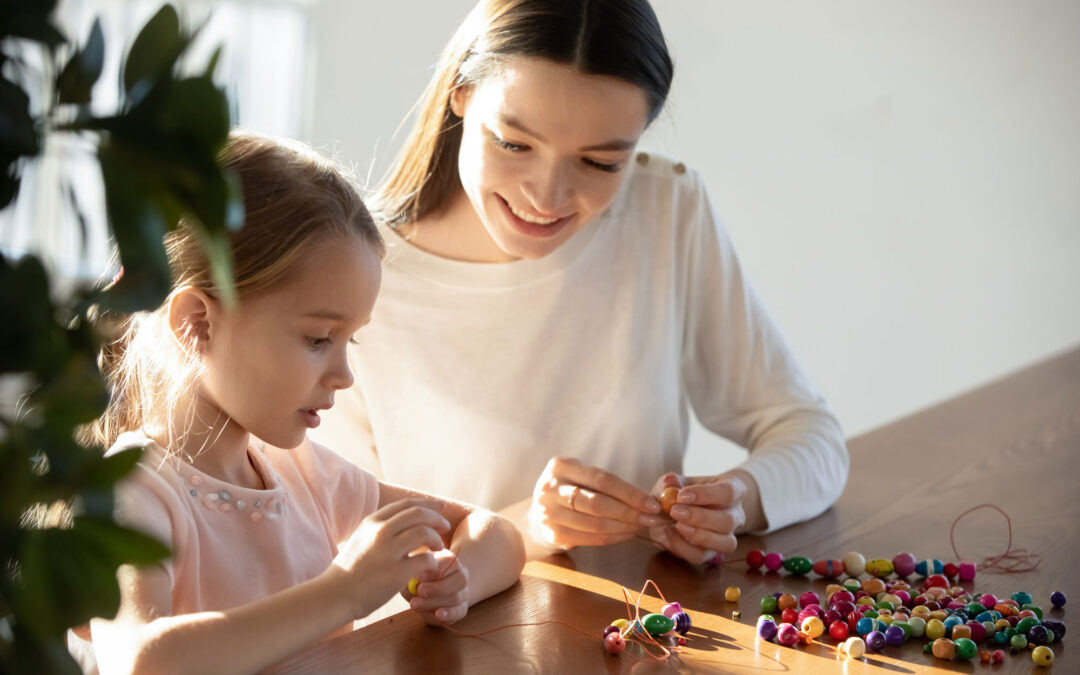
Friendship at four years old is not simple. It does not look like adult friendship — measured, reciprocal, consistent. It looks like two children who were best friends at morning tea and sworn enemies by lunch, reunited and inseparable again before afternoon tea. It looks like elaborate negotiations over who gets which role in a game, conducted with the seriousness of a boardroom meeting and the emotional volatility of a soap opera.
It is messy, frequently tearful, occasionally baffling — and it is some of the most important developmental work your child will ever do.
At Trio Early Learning, we watch these early social encounters unfold every day. And what we know — from both experience and research — is that friendship in early childhood is not something that simply happens to children. It is something they are actively learning, practising, and gradually getting better at. Our job, as educators and as families, is to understand that process well enough to support it without short-circuiting it.
What Is Actually Happening When Children Play Together
Play is the medium through which young children develop socially — full stop. Not structured lessons about sharing. Not circle time talks about being a good friend. Play. Specifically the kind of open-ended, child-directed, slightly chaotic play that adults are sometimes tempted to tidy up or redirect.
When two children negotiate who gets to be the pilot of the cardboard box spaceship, they are practising persuasion, compromise, perspective-taking, and emotional regulation simultaneously. When a child on the edge of a group watches and waits for their moment to join, they are reading social cues with a sophistication that would impress any organisational psychologist. When a conflict erupts over the last blue block and then — eventually, imperfectly — resolves itself, both children have learnt something about rupture and repair that will serve them in relationships for the rest of their lives.
None of this looks tidy. All of it is essential.
The Stages of Social Play: A Quick Map
Understanding where your child is developmentally makes the harder moments much easier to hold. Young children move through recognisable stages of social play — and knowing the stages stops you from worrying unnecessarily when your two-year-old shows zero interest in playing with other children, or from being surprised when your four-year-old’s friendships suddenly become intensely important and equally intense in their conflicts.
Very young children engage in solitary play — absorbed in their own world, largely indifferent to others nearby. This transitions into parallel play, where children play side-by-side, watching and subtly influencing each other without direct interaction. Then comes associative play — genuine interaction, shared materials, loosely connected activity. Finally, cooperative play emerges: shared goals, assigned roles, negotiated rules, and the full complexity of genuine collaborative friendship.
Most children move through these stages across the early years, but temperament, experience, and individual personality shape the pace considerably. A quieter child who engages in rich parallel play and has one or two close friendships is not socially delayed — they are socially themselves. The goal is never to produce the most gregarious child in the room. It is to ensure every child has a sense of belonging and at least one genuine connection.
What Helps at the Centre
The environment matters enormously. Open-ended materials — blocks, loose parts, dramatic play props, art supplies without a predetermined outcome — naturally invite collaboration in ways that single-purpose toys do not. A sandpit is inherently social. A set of twenty matching plastic toys is not.
Our educators at Trio are trained to observe social dynamics with genuine attention — noticing who is connecting, who is on the edges, where a quiet word or a gentle facilitation might open a door that a child cannot quite open alone. We do not leave children to sink or swim socially, but we also do not solve every conflict the moment it arises. The pause before intervening is one of the most valuable tools in an early childhood educator’s kit — because children who are given the space to work things out, with a trusted adult nearby if needed, develop social competence that children who are constantly rescued do not.
When conflicts do need adult involvement, we coach rather than adjudicate. “It looks like you both want the same thing — what could you do?” returns the problem-solving to the people who need to practise it. That approach, repeated hundreds of times across the early years, builds something significant.
What Helps at Home
The social learning that happens at the centre is most powerful when the home environment reinforces it. A few things that genuinely make a difference:
Prioritise one-on-one play dates with the same child repeatedly. Group settings are socially complex. A quieter, familiar context with one other child allows friendship to deepen and gives your little one a lower-stakes environment to practise in. The same child, again and again, is far more valuable than a rotating cast of new faces.
Stay nearby without hovering. Your presence makes children feel safe enough to take social risks. Your over-involvement removes the very experiences they need to grow through. The sweet spot is close enough to support, distant enough to let them try.
Resist the urge to fix conflict immediately. When things get tense between your child and a friend, the instinct to step in is powerful and understandable. But a moment of “I can see that’s tricky — what do you think you could do?” before you wade in gives your child the experience of being trusted with their own social problem. That trust is enormously valuable.
Name social experiences out loud. “It looked like Maya really wanted to join your game. How do you think she felt when you said no?” These conversations — quiet, curious, non-blaming — build the empathy and social awareness that are the foundation of genuine friendship. Children whose adults narrate the social world around them develop richer social cognition than those whose social experiences are left unexamined.
Take their social pain seriously. A falling-out with a friend at four years old is not trivial. To your child, it is enormous. “That sounds really disappointing. Tell me what happened” — and then genuinely listening — teaches your child that their social experience matters and that the people they love can be trusted with it. That lesson shapes how they seek support in relationships for the rest of their lives.
A Word on the Children Who Find It Harder
Some children take to social play easily and naturally. Others find it genuinely difficult — held back by temperament, by limited prior experience, by anxiety, or simply by a personality that prefers depth over breadth in relationships.
Both are valid. Both deserve support rather than correction.
If your child consistently struggles to join groups, experiences repeated conflict with peers, or seems genuinely lonely rather than contentedly solitary, it is worth a conversation with our team. Early, gentle support — a thoughtful change in how the environment is structured, a deliberate effort to build one key friendship, some specific coaching around joining strategies — can make an enormous difference. And the earlier it happens, the better.
Please never feel that your concern is too small to bring to us. If something about your child’s social world is worrying you, we want to know.
The friendships forming in our rooms right now — tentative, complicated, joyful, and utterly real — are among the most important things happening in your child’s development. We do not take that lightly.
We are here if you want to talk about it.
🌐 trioearlylearning.com.au
Sources
- Australian Children’s Education & Care Quality Authority (ACECQA) – Belonging, Being & Becoming: The Early Years Learning Framework for Australia (EYLF V2.0) https://www.acecqa.gov.au/sites/default/files/2023-01/EYLF-2022-V2.0.pdf
- Parten, M. – Social Play Among Pre-School Children, Journal of Abnormal and Social Psychology (1932) https://psycnet.apa.org
- Ladd, G. – Children’s Peer Relations and Social Competence: A Century of Progress (Yale University Press, 2005) https://yalebooks.yale.edu
- Gottman, J. – Raising an Emotionally Intelligent Child (Simon & Schuster, 1997) https://www.gottman.com
- Raising Children Network – Social Development: Toddlers and Pre-Schoolers https://raisingchildren.net.au/toddlers/development/social-emotional-development/social-development
- Zero to Three – How Young Children Develop Friendships and Social Skills https://www.zerotothree.org
- Trio Early Learning – Our Approach to Play-Based Social Learning https://trioearlylearning.com.au